
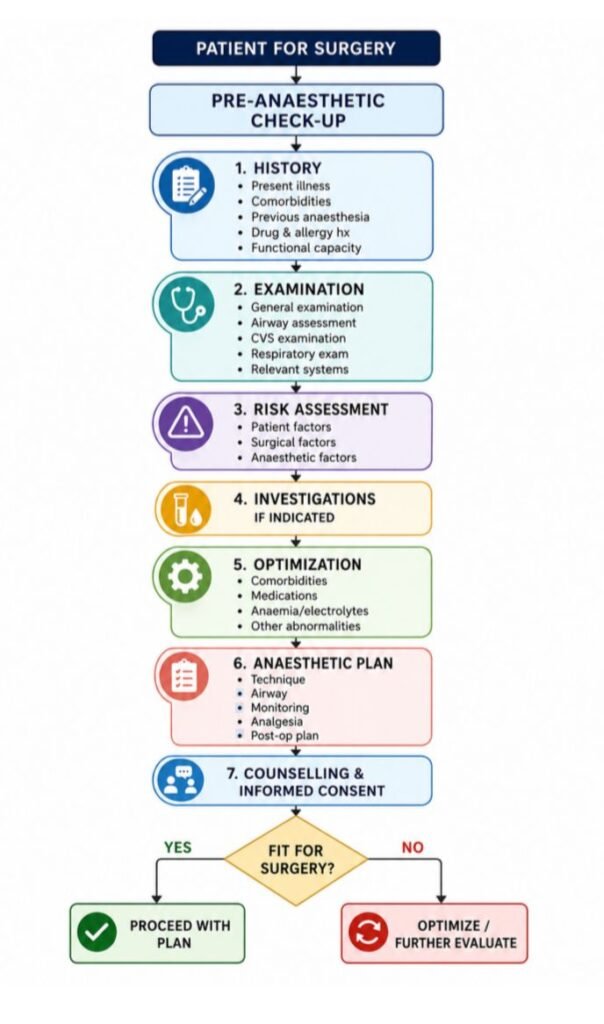
Pre-Anaesthetic Check-up (PAC)
Table of Contents
ToggleObjectives of PAC
The Pre-Anaesthetic Check-up (PAC) is a systematic evaluation performed before anaesthesia to assess the patient’s current health status, identify potential preoperative risks, optimise the patient, and formulate an individualised anaesthetic plan.
The main objectives are:
- Assess the patient’s current health status
- Identify existing medical conditions and their severity.
- Assess functional capacity and physiological reserve.
- Identify anaesthesia-related risks
- Difficult airway
- Aspiration risk
- Cardiovascular instability
- Respiratory complications
- Drug allergy or previous adverse anaesthetic events
- Identify and assess comorbidities
- Cardiovascular disease
- Respiratory disease
- Diabetes mellitus
- Renal and hepatic disease
- Neurological disorders
- Haematological disorders
- Other relevant systemic diseases
- Review previous anaesthetic and surgical history
- Previous difficult intubation or ventilation
- Previous awareness
- Postoperative nausea and vomiting
- Drug reactions/anaphylaxis
- Malignant hyperthermia
- Prolonged neuromuscular blockade
- Optimise the patient’s medical condition
- Correct significant physiological or biochemical abnormalities where possible.
- Optimise poorly controlled comorbidities.
- Review and appropriately manage preoperative medications.
- Determine the need for investigations
- Investigations should be individualised according to the patient, comorbidities, and proposed surgery rather than performed routinely in every patient.
- Assess surgical and preoperative risk
- Consider patient-related factors.
- Consider the type and magnitude of surgery.
- Consider expected blood loss and physiological stress.
- Formulate an individualized anaesthetic plan
- Choice of anaesthetic technique
- Airway management plan
- Monitoring requirements
- Vascular access
- Analgesic strategy
- Postoperative disposition
- Counsel the patient and obtain informed consent
- Explain the proposed anaesthetic technique.
- Discuss relevant risks and alternatives.
- Address patient concerns and expectations.
- Plan postoperative care
- PACU vs HDU/ICU requirement
- Postoperative analgesia
- Respiratory support
- Anticipated postoperative complications
The PAC in one line
PAC = Assess → Identify risk → Investigate when indicated → Optimize → Plan → Counsel → Proceed
References
- Gropper MA, ed. Miller’s Anesthesia. 10th ed. Elsevier; 2025.
- Butterworth JF, Mackey DC, Wasnick JD. Morgan & Mikhail’s Clinical Anesthesiology.
- American Society of Anesthesiologists. Practice Advisory for Preanesthesia Evaluation.
Systemic History and Examination
After the general history, a systemic review followed by examination of the corresponding system should be performed. The depth of assessment depends on the patient’s symptoms, comorbidities and planned surgery.
1. Cardiovascular System
History
Ask about:
- Hypertension
- Ischaemic heart disease
- Previous myocardial infarction
- Angina
- Heart failure
- Valvular heart disease
- Arrhythmias
- Congenital heart disease
- Previous cardiac surgery/interventions
- Cerebrovascular disease
Symptoms
Specifically ask about:
- Chest pain → possible myocardial ischaemia
- Dyspnoea → heart failure or other cardiopulmonary disease
- Orthopnoea → left ventricular failure
- Paroxysmal nocturnal dyspnoea
- Palpitations → possible arrhythmia
- Syncope/presyncope → important in valvular disease or arrhythmia
- Reduced exercise tolerance
- Peripheral oedema
Functional Capacity
Assess the patient’s ability to perform activities such as:
- Walking on level ground
- Climbing stairs
- Walking uphill
- Performing household activities
Ask whether these activities cause:
Chest pain / Dyspnoea / Palpitations / Fatigue
Examination
Assess:
- Pulse rate and rhythm
- Blood pressure
- Peripheral pulses
- JVP
- Heart sounds
- Murmurs
- Added sounds
- Peripheral oedema
Look for evidence of:
Ischaemia → Arrhythmia → Valvular disease → Heart failure
Anaesthetic relevance
Cardiovascular assessment helps identify patients at risk of:
- Perioperative myocardial ischaemia
- Arrhythmias
- Haemodynamic instability
- Heart failure
- Poor tolerance of anaesthetic-induced changes in preload, afterload and contractility
2. Respiratory System
History
Ask about:
- Asthma
- COPD
- Obstructive sleep apnoea
- Previous pneumonia
- Tuberculosis
- Interstitial lung disease
- Previous respiratory failure
- Home oxygen therapy
- CPAP/BiPAP use
- Previous thoracic surgery
Symptoms
Ask about:
- Cough
- Sputum production
- Wheezing
- Breathlessness
- Haemoptysis
- Exercise limitation
- Recent respiratory infection
Also ask about:
- Smoking
- Vaping
- Occupational exposure
Examination
Assess:
- Respiratory rate
- SpO₂
- Work of breathing
- Chest expansion
- Tracheal position
- Percussion when indicated
- Air entry
- Wheeze
- Crepitations
- Other added sounds
Anaesthetic relevance
Respiratory assessment helps identify risk of:
- Difficult ventilation
- Perioperative hypoxaemia
- Bronchospasm
- Atelectasis
- Pneumonia
- Postoperative respiratory failure
- Prolonged ventilatory support
3. Neurological System
History
Ask about:
- Stroke/TIA
- Seizure disorder
- Epilepsy
- Neuromuscular disease
- Parkinsonism
- Peripheral neuropathy
- Raised intracranial pressure
- Dementia/cognitive impairment
- Previous neurological surgery
Symptoms
Ask about:
- Headache
- Seizures
- Weakness
- Sensory loss
- Altered consciousness
- Speech disturbance
- Visual symptoms
- Gait abnormalities
Examination
Assess:
- Consciousness and orientation
- Higher mental functions when relevant
- Cranial nerves when indicated
- Motor system
- Sensory system
- Reflexes
- Coordination
- Gait where appropriate
In patients planned for neuraxial anaesthesia, document baseline neurological findings when clinically relevant.
Anaesthetic relevance
Identify risk of:
- Perioperative neurological deterioration
- Seizures
- Aspiration due to impaired consciousness/protective reflexes
- Postoperative cognitive complications
- Respiratory compromise in neuromuscular disease
4. Gastrointestinal & Hepatobiliary System
History
Ask about:
- Gastroesophageal reflux disease
- Peptic ulcer disease
- Liver disease
- Jaundice
- Hepatitis
- Cirrhosis
- Previous GI bleeding
- Abdominal surgery
Symptoms
Ask about:
- Nausea/vomiting
- Abdominal pain
- Reflux/regurgitation
- Dysphagia
- GI bleeding
- Altered bowel habits
- Jaundice
- Abdominal distension
Examination
Assess:
- Abdomen
- Tenderness
- Distension
- Hepatomegaly
- Splenomegaly
- Ascites
- Signs of chronic liver disease
Look for:
- Jaundice
- Spider naevi
- Palmar erythema
- Muscle wasting
- Peripheral oedema
Anaesthetic relevance
Important concerns include:
- Aspiration risk
- Altered drug metabolism in liver disease
- Coagulopathy
- Portal hypertension
- Ascites
- Electrolyte abnormalities
- Malnutrition
5. Renal System
History
Ask about:
- Chronic kidney disease
- Acute kidney injury
- Dialysis
- Renal transplantation
- Recurrent urinary tract infections
- Renal stones
Symptoms
Ask about:
- Reduced urine output
- Oedema
- Haematuria
- Dysuria
- Changes in urinary frequency
For dialysis patients ask about:
- Dialysis modality
- Frequency
- Last dialysis session
- Vascular access
- Previous dialysis-related complications
Examination
Assess:
- Hydration
- Blood pressure
- Peripheral oedema
- JVP when relevant
- Signs of fluid overload
- Dialysis access
Anaesthetic relevance
Renal dysfunction may affect:
- Fluid and electrolyte balance
- Acid-base status
- Drug clearance
- Neuromuscular blocker duration
- Bleeding tendency
- Perioperative fluid management
6. Endocrine & Metabolic System
History
Ask about:
- Diabetes mellitus
- Thyroid disease
- Adrenal disease
- Pituitary disease
- Obesity
- Electrolyte disorders
Diabetes
Ask about:
- Duration
- Treatment
- Insulin use
- Glycaemic control
- Hypoglycaemic episodes
- End-organ complications
Specifically assess for:
Nephropathy + Neuropathy + Retinopathy + Cardiovascular disease
Thyroid disease
Ask about:
- Hypothyroidism
- Hyperthyroidism
- Previous thyroid surgery
- Current treatment
Examination
Assess:
- Weight/BMI
- Hydration
- Features of thyroid dysfunction
- Signs of diabetic complications
- Peripheral neuropathy when indicated
Anaesthetic relevance
Endocrine disorders may influence:
- Haemodynamic stability
- Blood glucose
- Electrolytes
- Temperature regulation
- Drug sensitivity
- Airway management
7. Haematological System
History
Ask about:
- Anaemia
- Bleeding disorders
- Easy bruising
- Previous thrombosis
- Previous transfusion
- Transfusion reactions
- Anticoagulant/antiplatelet therapy
Symptoms
Ask about:
- Fatigue
- Dyspnoea
- Palpitations
- Easy bruising
- Gum bleeding
- Epistaxis
- Menorrhagia
- Previous abnormal surgical bleeding
Examination
Look for:
- Pallor
- Petechiae
- Ecchymosis
- Lymphadenopathy
- Splenomegaly
- Signs of thrombosis
Anaesthetic relevance
Identify risk of:
- Perioperative bleeding
- Anaemia-related tissue hypoxia
- Thromboembolism
- Transfusion requirement
- Neuraxial anaesthesia-related bleeding complications
8. Musculoskeletal System
History
Ask about:
- Arthritis
- Cervical spine disease
- Rheumatoid arthritis
- Previous joint replacement
- Spine disease
- Musculoskeletal deformities
- Chronic pain
Examination
Assess:
- Cervical spine movement
- Temporomandibular joint movement
- Joint mobility
- Spine abnormalities
- Deformities
Anaesthetic relevance
Important because musculoskeletal abnormalities may cause:
- Difficult airway management
- Difficult positioning
- Difficult neuraxial access
- Increased risk of pressure/position-related injury
9. Genitourinary & Obstetric History
History
Ask when relevant about:
- Renal/urological disease
- Menstrual history
- Possibility of pregnancy
- Obstetric history
- Previous caesarean sections
- Pregnancy-related complications
Examination
Perform only when clinically indicated and with appropriate consent/chaperone.
Anaesthetic relevance
Pregnancy can significantly alter:
- Airway
- Respiratory physiology
- Cardiovascular physiology
- Gastric emptying/aspiration risk
- Drug pharmacology
Pregnancy status may therefore influence both anaesthetic technique and perioperative planning.
10. General & Functional Assessment
Before completing the PAC, reassess:
General condition
- Nutritional status
- Hydration
- Frailty
- Obesity
- Functional independence
Functional capacity
Assess:
What can the patient actually do?
Reduced functional capacity may indicate limited cardiopulmonary reserve and can influence perioperative risk assessment.
Key Principle
In PAC, history and examination should be directed towards identifying conditions that can change anaesthetic management. A systemic review is therefore not merely a checklist—it is a process of risk identification and planning.
References
- Gropper MA, ed. Miller’s Anesthesia. 10th ed. Elsevier; 2025.
- Butterworth JF, Mackey DC, Wasnick JD. Morgan & Mikhail’s Clinical Anesthesiology.
- American Society of Anesthesiologists. Practice Advisory for Preanesthesia Evaluation.
- American Society of Anesthesiologists. Standards for Basic Anesthetic Monitoring.